LE’ADOR
A jewellery showroom conceived around a quieter kind of presence. A restrained material palette, custom display furniture and considered lighting create a setting for vintage and contemporary pieces.
A setting for the precious.
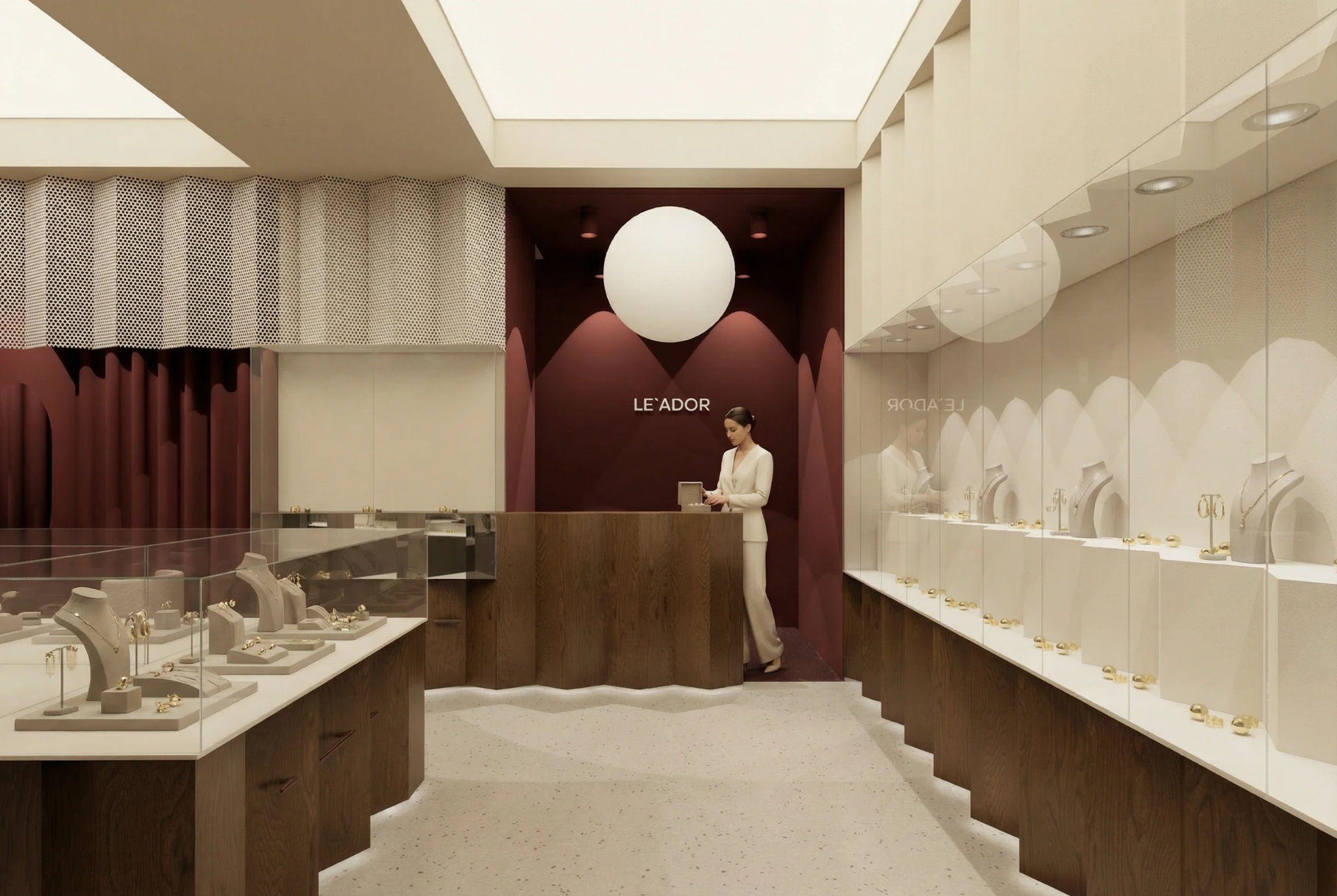
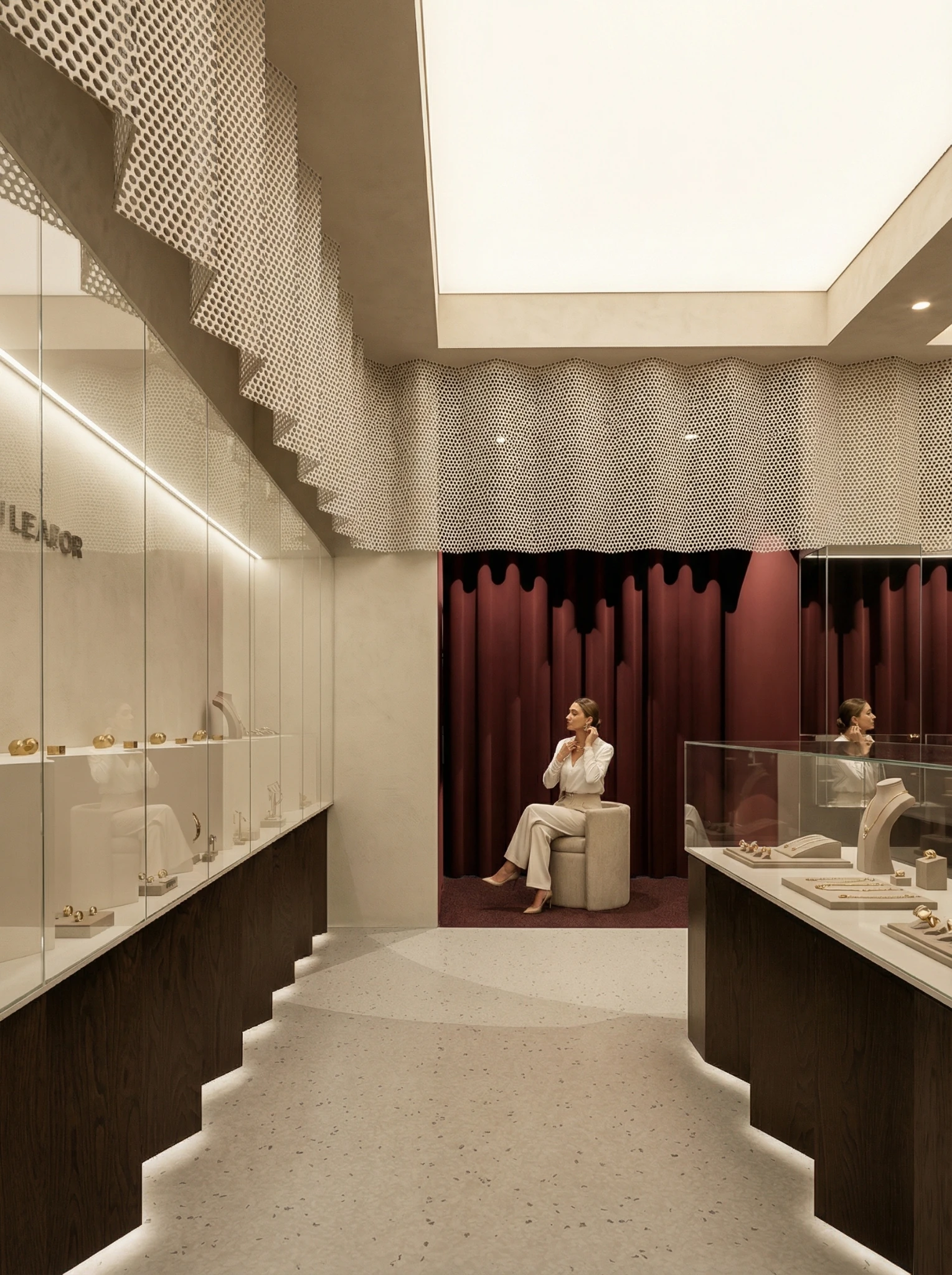
The eye moves from the length of the display to the detail of a single piece. Glass vitrines establish the showroom’s main lines, while their dark, faceted bases give the furniture a sculptural presence. Above, a patterned screen introduces another rhythm. The jewellery remains close at hand within a room composed of successive layers.
A language of folds
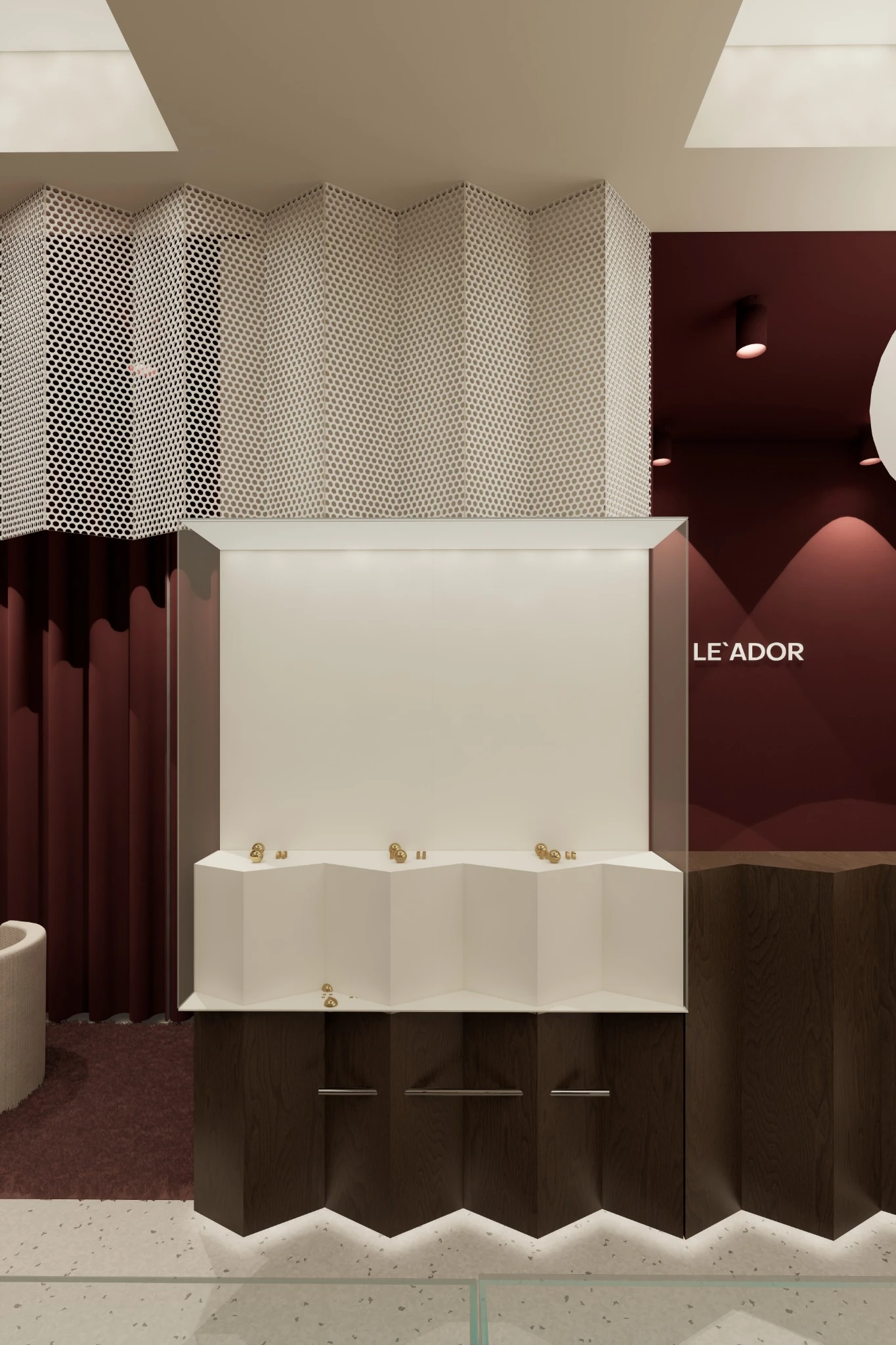
The folds beneath the vitrines break a long counter into a sequence of smaller planes. Light catches each face differently, giving the base depth without introducing another colour. Pale supports inside the cases make a quiet contrast to this darker foundation.
The upper screen develops a finer pattern. Read together, furniture and ceiling edge bring detail to different scales: one close to the hand, the other shaping the atmosphere of the whole room.
Burgundy as a backdrop
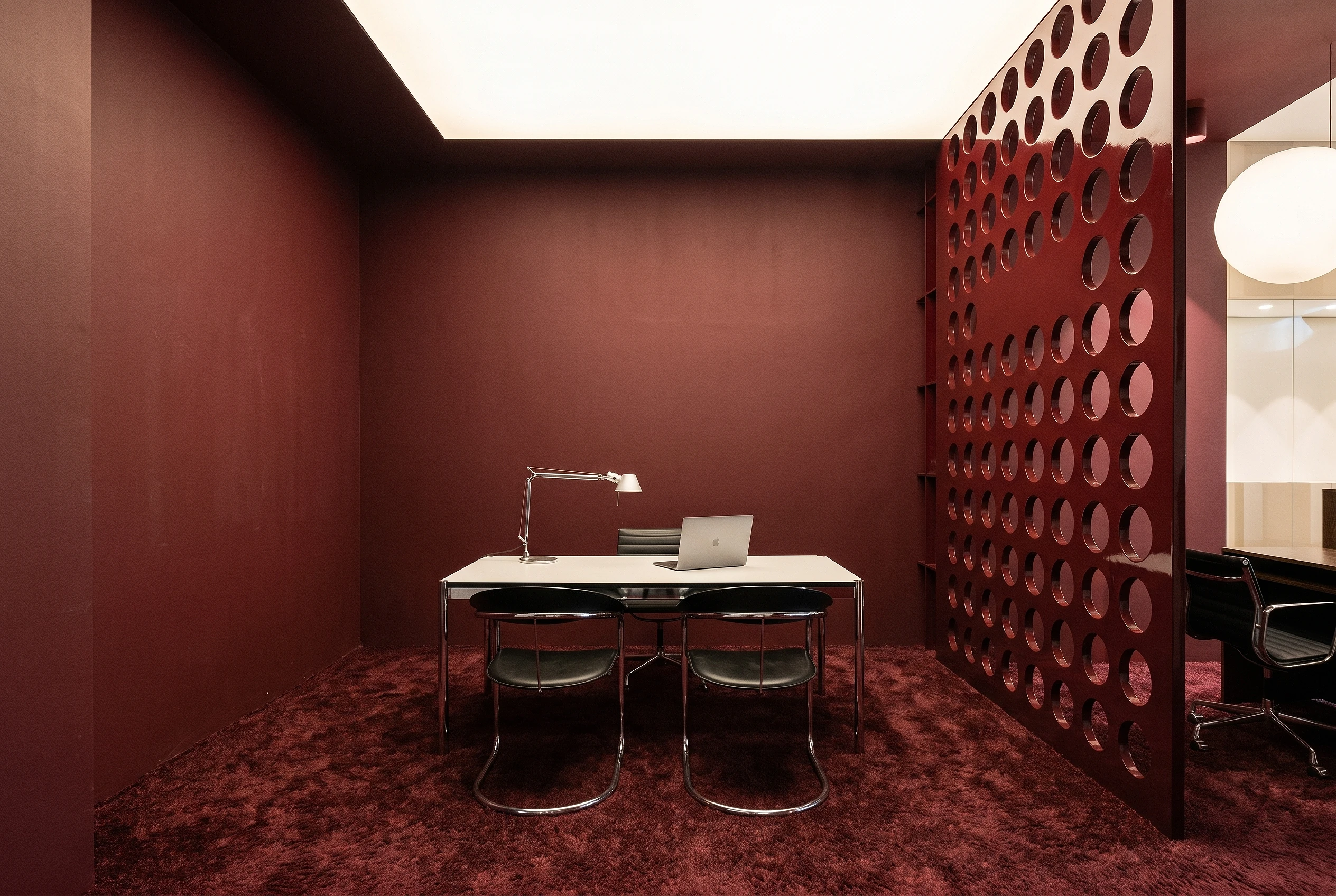
At the back of the showroom, burgundy curtains and a deeper-toned wall bring a concentrated field of colour. A pale seat marks a place for consultation, shifting the pace from browsing to a conversation about a particular piece.
This softer setting belongs to the same interior as the precise glass displays. The contrast between textile, pale surfaces and darker bases gives vintage and contemporary jewellery a layered, welcoming context.
Light close to the object
Illumination follows the display edges and picks out the contents of the vitrines. Larger luminous planes overhead and a suspended globe introduce a broader scale of light. The visual studies explore how the room can feel composed while individual objects remain legible.
Across approximately 80 square metres, LE’ADOR is conceived as more than a sequence of showcases. Its furniture, light and quieter seating area work together to give the act of choosing jewellery time and space.
Design development / Images show interior and display visualisations.